Sunday, May 30, 2010

CCT Journal 3: Players & Characters

I have 3 players. It is a little less than I would like. Ideally there would be 4-5 players in a D&D game so that if 1 has to miss a week the game doesn't feel too claustrophobic. Also that way you have enough different personalities and strengths at the table to keep things interesting. But I live in a small town with very few gaming hobbyists. I've looked. I've advertised. 3 is what I've got and I'll take it.

2 of the players are D&D players through and through. One of them has only ever played 2nd edition until now. The other has dabbled in GURPS and other stuff, but comes back to D&D because he likes the 'kill stuff - get loot' paradigm.

D&D is not my favorite role-playing game. I prefer games where the focus is on the narrative and players and GM have a lot of freedom to improvise for the sake of a good story. But D&D is where I got my start like most roleplayers and it retains some nostalgic interest for me - and Pathfinder is leaps and bounds better than any previous or current iteration of the game. So I'm having fun.

Here are the characters we have in the party:

Pansa (M Drow Ranger CN) An interesting aspect of interacting with this character is I am occasionally finding myself having to clarify what I would define as "evil". Many people play Chaotic Neutral because they believe it gives them a license to do whatever they want. Not my take. This character is happy though if he gets to succeed at shooting stuff, do cool acrobatic flippy stuff, and find uses for weird items found lying around. He wants to be a Sable Company Marine and have a hippogriff to fly around on, so that gives me plenty of hooks to get him into the story.

Hrungar (M Dwarf Fighter NG) Interestingly this is the character that does the most "speaking in character" even though the player is the least experience role-player in the group. He speaks in dwarven cliches and its thoroughly fun. Sometimes keeping it simple is the best advice. He drinks a lot, threatens people with his axe, and is very protective of his fellow party members - all bearing fun fruit at the table. He has a guilty past as a drug addict and paying for those past mistakes is how he's being pulled into the story.

Safiya (F Half-Elf Oracle CG) The Oracle is a new class, not even released yet, as part of the Pathfinder Advanced Players Guide. She is the healer and the magic damage dealer rolled into one - convenient for a 3 person party. The source of her powers as an oracle is a big mystery which will keep popping up through the story again and again.

Saturday, May 29, 2010

UFC 114: Rampage vs. Evans Prediction

I'm pretty excited about what is going to begin in about an hour and a half - UFC 114. There has been a huge surplus of trash-talking between "Sugar" Rashad Evans and Quinton "Rampage" Jackson for more than a year now, ever since Rashad entered the ring after Jackson eked out a victory over Rashad's teammate Keith Jardine. (Rashad tends to stick up for Keith Jardine all the time, sort of a weird big-brother thing).

So now, after The Ultimate Fighter Season 10, the delay around Rampage filming the A-Team movie, and a whole lot of build up through things like UFC Primetime, they're going to settle things. Or at least fight.

Right now most odds-makers have them dead even. MMA Torch has Evans with a slight advantage. Before things happened, I thought I would weigh in with my own thoughts.

I've always been a fan of Rampage, and after TUF 10 I became more of a fan of Evans. I got a chance to see what a good coach he turned out to be, and how willing he was to help his teammates, in contrast with Rampage, who came off over the course of the show as lackluster in everything but trading insults with his rival.

Everyone talks about how Rampage is larger and more powerful, where Evans has more speed and perhaps athleticism. They both have one-punch knockout power and are both strong wrestlers, though Rampage usually uses his to stuff takedowns or to get back to his feet, and hasn't used much of his ground-and-pound since his Pride days.

On paper things look even - except when you take into account the camp each fighter comes from.

Rampage comes from the Wolf's Lair camp in the UK, training with the likes of Michael Bisping and Cheick Congo. Rampage is far and away the most successful fighter in that camp, and I honestly wonder if he gets a chance to train with anyone near his caliber on a regular basis.

On the other hand, Rashad Evans comes from one of the half-dozen best MMA training camps in the world (those would be, in my opinion, in addition to Jackon's Submission Fighting, American Top Team, American Kickboxing Academy, Black House, Chute Box, and Extreme Couture). At Jackson's Submission Fighting, Evans trains regularly with the likes of GPS, Shane Carwin, Nate Marquardt and Keith Jardine, as well as up-and-comers like Jon Jones. This means that every day he is pushed by some of the best fighters in the world, including two current UFC champions in GPS and Carwin (Interim HW).

Granted - Rampage has said he is more motivated than ever before, and a motivated, well-trained Rampage is terrifying, considering how he has dominated in the past despite terrible management, lack of training, and so on. So I don't put it past him to knock Evans' skull into the fifth row at the MGM Grand Garden Arena.

Given that, however, I am going with Evans. I think that they are so evenly matched that who they train with will make the difference. I think that Greg Jackson has assembled what might be the most talent-rich roster in MMA right now, and I think that will make a big difference. In order for Rampage to defeat someone who matches up so evenly with him, he will need to move to a camp where he regularly faces fighters of equal caliber.

Rashad Evans by unanimous decision, because my assumption is that his game-plan is lay-and-pray and out-work on the feet. I think Evans will avoid settling in and trading hard shots with Rampage because...who the hell would want to trade with Rampage?

Wednesday, May 26, 2010

CCT Journal 2: Saving Time

I continue to GM my way through Paizo's excellent adventure path "The Curse of the Crimson Throne."

Among my reasons for deciding to use the adventure path was time. I have a job which consumes a fair amount of my creative energy. I have a family, including 2 young boys, I want to spend time with. And I have a bunch of other creative projects I want to work on in my free time and I wasn't sure how much time or energy I would have to design and run my own campaign. Couple that with the reality that I was starting with completely new players who's only gaming experience was with D&D which is notoriously time-intensive for the GM in terms of prep and my decision seems obvious.

I should know better than to think I am ever going to not work on a campaign between sessions. I have still spent hours each week prepping for the next session, planning long term story elements and so on. The difference is that I have done so voluntarily and almost none of that time has gone into writing down stats for monsters, painstakingly designing EL-appropriate encounters, or figuring out what to put in treasure hordes. I have been able to put my focus entirely on story, NPC's, and plot development. I know the stats for the monster they're going to fight this week are already in the book. I can worry about the dialogue I want them to have before they're dragged into the fight. The adventure path has done most of the boring work for me.

Furthermore, I really CAN just run a session from the book without much additional prep at all. I don't usually choose to do that, but if a week gets really busy it won't mean having to cancel our game because the GM isn't prepared. I can crack open the module 20minutes before game time and be ready to go.

Monday, May 24, 2010

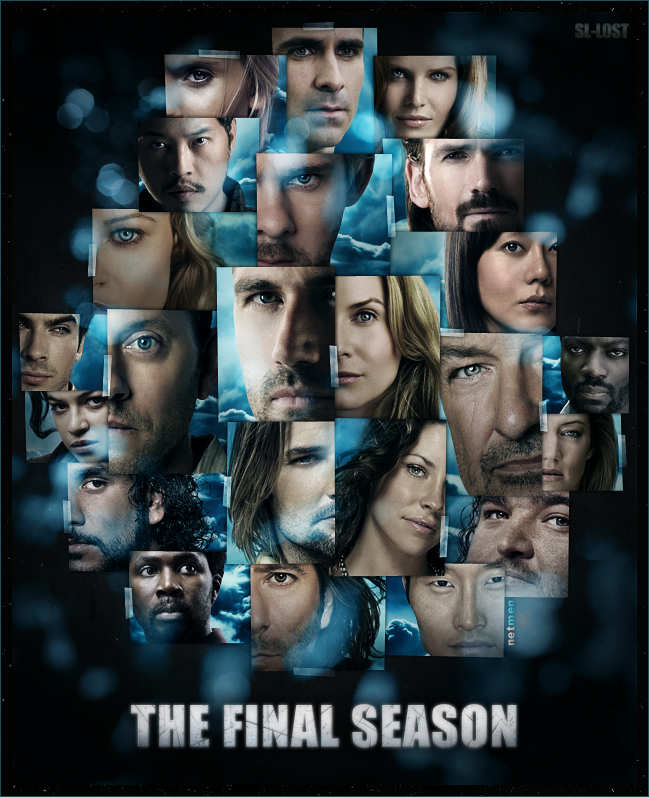
LOST: Fantasy and Fairy Tale


I need to think about more of this, but I think that not only did LOST end up being a story about life after death after all, not only a fantasy story and not science-fiction, I think it might also be better understood as a fairy tale...within a fairy tale.

There is the first fairy tale of the cast being dropped on the most messed-up island ever; that is their excursion out of the real world, and while in the "faerie" realm of the island, they have larger-than-life adventures, grow as people, some of them learn wisdom, etc. Ultimately, they all die, and that is the second fairy tale - the excursion into the alternate reality that they can all inhabit so that they meet each other again, after they have all died at the various times they died, so that they can meet up one more time before they go on to whatever comes next.

I have to admit that even with all of the unanswered questions from the show (apparently we're supposed to buy the blu-ray to get more answers, which is predictable), it has me thinking more than most tv-show finales do. For all it's flaws, there was a lot good about LOST, and I find that it is sticking with me.

In his essay On Fairy Stories, Tolkien describes four benefits of fairy stories: fantasy, recovery, escape and consolation. I'd like to look at the LOST finale and see if, in my experience and opinion, it provides any of these benefits as a fairy tale.

Do you think fairy tale fits for LOST? Or is it best described as something else?

Thursday, May 20, 2010

CCT Journal 1: Why I Hate Adventure Modules

A miracle has happened and I have actually arranged a weekly roleplaying group in the tiny town of Fort Morgan, Colorado. We have met 3 times, once to create characters and 2 sessions of play. We are playing through Paizo's second Pathfinder Adventure Path, "The Curse of the Crimson Throne". I will use this space once in a while to record my thoughts about the campaign as it progresses.

I have now read thoroughly through the first 3 books of this 6 book adventure path and I have an idea what is in the other 3. I'm pretty confident that this is the best pre-generated adventure material ever produced for any version of D&D. Eberron remains my favorite setting for D&D. Golarion, the Pathfinder setting, is a bit to generic-fantasy for my tastes, but that doesn't take away from the pure excellence of the adventure paths Paizo is producing.

I am not a fan of adventure modules as a rule. I have read many, and run a few when forced to, or as demos in the course of employment at a game store, but I have always found them lacking. I have disliked them for many reasons, and this Adventure Path is overcoming many of those reasons.

Reason #1 I hate adventure modules - They are nearly all "location based". Most adventure modules are glorified dungeon crawls. Since the designer can't know the player-characters, the group tastes in roleplaying or exactly how or where you will slot it into your campaign they usually design something that can stand on its own - a dungeon.

Curse of the Crimson Throne has dungeons in it, but the adventure is driven by the story and the events happening in the city of Korvosa. Your players are led to go dungeoneering when the story requires it, not because they need more lootz.

Reason #2 I hate adventure modules - No character back story involvement. I want a game that draws out the flaws and history of the PC's and makes it relevant to the events in the campaign. An entire plot and game designed without the PC's even in the picture is lame lame lame.

Curse of the Crimson Throne still suffers a little from this, but it is a light-year ahead of any other module I've seen. The PC's all start the campaign with traits that tie them to the story and give them a hook to want to explore the plot. Furthermore, there is an entire player's guide devoted to helping you create characters with involvement in the setting and story of the adventure path.

Reason #3 I hate adventure modules - Dull cookie-cutter encounters, universally resolved with violence. Again, not knowing what characters a given party will have adventure module designers are often hesitant to create too-elaborate encounters or situations where a party may get stuck for lack of the right spell or class ability. The one constant in D&D is violence, so they make encounter after encounter where the most obvious and best solution is to just kill everything.

Curse of the Crimson Throne so far has a lot of diversity in the encounters and it is very rare that violence is the only or best solution. Rewards are sprinkled through the adventure for players that get creative, or avoid drawing steel at every turn. Some encounters are serious and threatening, and some, quite frankly, are hilarious. There are games and tests of skill and the story is flexible enough (not being stuck in the straightjacket of a dungeon) to handle the party failing once in a while.

Essentially, I am very impressed. Of course, I can't leave well enough alone. Not satisfied that the adventure is centered tightly enough around my particular players I am weaving new elements in as we go along, but that is what a DM is supposed to do.

Monday, May 17, 2010

The Tolkien Professor and My Tolkien Game

Sill working on Servants of the Secret Fire, my slow-burn Middle-Earth tabletop rpg project - more lately than usual because I have recently discovered The Tolkien Professor. The Tolkien Professor is Doctor Corey Olsen of Washington College in Maryland. He is a scholar of medieval literature who teaches courses on, among other things, all of Tolkien's works. He also posts his class lectures to his website and via iTunes, as well as supplemental lectures on Tolkien and his sub-creation Middle-Earth.

Unless you are lobotomized, this stuff is fascinating, and I am assuming that anyone besides Google reading this blog is likely at least a little bit interested in Tolkien and his works. I can easily recommend any of the supplemental lectures Dr. Olsen has posted as a starting-point, since his class lectures aren't as interesting if you aren't reading the books as you follow along, or don't have them fresh in your memory.

Now back to thinking about what to do with a Middle-Earth rpg with no licence, original artwork, budget or collaborators.