Showing posts with label Pathfinder. Show all posts

Tuesday, April 14, 2015

Running Evil NPCs

d.jpg


I am currently running a local group through Pathfinder's Reign of Winter adventure path. In the most recent session, the PCs (who are mostly good-aligned) ended up taking two prisoners at the end of a big combat, as they do when their opponents surrender. Both of these NPCs who surrendered were listed as Neutral Evil in alignment, but neither one had a reason to fight to the death when the battle was already lost.

One of the NPCs was a human female soldier, a commanding officer, but not philosophically committed to evil. Just naturally selfish and maybe more violent than most. The other was a supernatural fey creature who was evil by nature, corrupted by dark witchcraft. In both cases, the PCs entered into negotiations with them, and were very reasonable. They even let the sergeant leave with her "loot" from her bedroom, rather than taking it.

As a result, the PCs got some quality information, especially from the supernaturally evil fey, because she wasn't bought in to any particular cause, and was thankful for not being killed with cold iron. In both cases, though, they were kind of moved by the mercy shown, and in the case of the sergeant, I imagine her heading home with her possessions and life intact and really thinking about her life, maybe even making another decision. (In fact, she's likely to come back later as a character working toward reformation).

The point I'm getting at with this little gaming story is that, given how alignment leads to so much misunderstanding and internet flame-wars (and memes, as above) it's good to be flexible and responsive. It's even good to reward "good" behavior in reasonable ways. Just because it says "NE" or even "LE" or "CE" on a character sheet doesn't mean the person in question is always doing evil things, or will die in order to do evil, or will refuse to surrender, or is always lying and selfish.

Not only that, but these little moments of mercy are the kinds of moments that actually do change people for the better, sometimes, in the same way that one horribly cruel and painful event can change someone for the worse (again, arguably, see above).  If nothing else, it gives "good" PCs in a D&D-style game to be something other than cookie-cutter moralists or, more often, just people who ignore alignment almost all of the time. Even if their mercy is not returned, or if they are taken advantage of, it just pushes them to another important choice - how do they respond?

Thursday, April 7, 2011

CCT 18: Fungeon Crawling

Book 5 of this adventure path, Skeletons of Scarwall, is one huge dungeon crawl. I have previously said that dungeon crawls were one of my least favorite aspects of roleplaying and I feel like this journal and the next few entries could be a series of apologies as in "I don't like dungeon crawls but.."  The truth is that any scenario can be lame and any scenario can be awesome depending how it is handled. I've played games about escaping from slavery in the South that were incredible. I've run games where absolutely everyone died in a miserable painful gory failure and it was a blast. Anything can be fun when handled well and I've learned by now that Paizo is capable of handling almost anything extremely well.

So no more apologies. This book isn't fun despite being a dungeon crawl. This book is just fun. Here is what they have done right so far in this book:
  • They have set the dungeon up as an epic and terrifying place and you believe it. It has a creepy history and the players have a good reason for needing to delve into it. We aren't just poking in caves for treasure. We are braving something absolutely no one else wants any part of because we're big damn heroes.
  • The difficulty of the encounters lives up to the epic reputation. We don't have room after room of goblins to slog through till we get to the boss. This place will kick your ass before you even get in the gate and then keep kicking it till you call mercy.
  • It is soaking in atmosphere. They give you a history for every encounter and lots of flavor stuff to plug in as the GM so that the place has a personality. Scarwall is the major antagonist of this book, not just the monsters inside. The players in my group are already referring to the place as if it was sentient.
  • The encounters follow a logical progression and the dungeon itself responds to the choices of the players. Monsters don't sit in their rooms waiting for the party to kick down the door. The dungeon develops as the party accomplishes certain things. There is a sort of meta-puzzle to be 'solved' here.
  • There is immense variety, but all within the theme. One encounter to the next very different skills and tactics are called for from the players, but all of it fits well. Nothing seems random or stupid like gelatinous cubes randomly wandering down hallways.
Paizo keeps bringing the win.

Thursday, March 17, 2011

CCT 17: Oops

Well... that was a near TPK.

We finished the fourth book in the adventure path this week and it ends in a giant battle with Red Mantis assassins, a deranged racist ranger (aren't they all?) called the Cinderlander, a host of Gargoyles, and the leader of the Red Mantis in this region an evil lady named Cinnabar. I honestly hadn't expected it to be that dangerous of an encounter, but I forgot to take into account several factors:


  • Being ambushed in the middle of the night means no armor. Also no packs full of potions and other handy gear and no secondary weapons. They basically charged into battle naked with the weapons they grabbed from beside their beds.
  • Being separated over a large area means no access to healing magic or buffs for some of the characters and a significant tactical disadvantage. The bow-ranger had to fight with his sword up-close with no backup. The rogue, couldn't hide and sneak attack. The oracle had no bulky fighter to hide behind.
  • Sneak attacks are a bitch.
Result: 3/4 PC's, 1 Animal Companion, and 1 NPC cohort all dead.

It has been a long time since I've overseen a bloodbath that severe. It definitely served notice that I am not a GM who is afraid to pull the trigger - even if it was sorta unintentional.

No feelings were hurt. Two of the players opted for resurrections, while one opted to roll up a new character. I tried to give them all glorious and dramatic ends, and realized after the fact that the deathblows were coincidentally all delivered by one nameless Assassin who is definitely getting a promotion to named NPC so the players can have the satisfaction of wreaking revenge later on. Since the deaths came rapidly one right after another it was pretty hilarious to watch the stunned silence that followed as the lone survivor, a dwarf fighter, walked back into the camp to find his entire party had been massacred.

Oops.

Tuesday, March 15, 2011

CCT 16: Catching Up

It has been way too long since my last entry in this journal. I have infinite excuses. I will spare you.

Tonight we are concluding the 4th book in the adventure path "A History of Ashes." This makes it a good time for a bit of retrospective analysis on the series so far.

As was apparent from the first 15 posts in this journal I am very impressed with Pathfinder as a whole and with the Curse of the Crimson Throne adventure path in specific. Book 1 was a solid B+ beginning. It introduced us to the city, contained some great NPC's and a memorable roof chase sequence which my players still talk about. It's downsides were that it was more or less a cliche series of quests for a patron. It could have done much more with the chaos in the city. Still a mile ahead of any other module I'd ever read or run up to that point.

Book 2 "Seven Days to the Grave" blew the first chapter right out of the water, and probably set a standard that the rest of the campaign will not be able to live up to. It is a definite A+. Great characters. Great mood. Creative encounters. Exciting plot. Nothing bad to say about this really.

Book 3 "Escape from Old Korvosa" was a major letdown after the second outing was so superb and will probably be the nadir of the campaign when we're finished. The story didn't give you very good reasons for being in conflict with the major badguys of the book. The Arkonas were interesting, but tangential to the main interests and concerns of the party. The Vivified Labyrinth which provided the climax of the campaign was a throwback to old-school trap-infested dungeons. There is a reason these dungeons are "old" school. A long sequence of nearly unavoidable "save or take tons of damage" situations isn't very fun. It might have been interesting if the dungeon had been a puzzle that could be solved, or a series of challenges that could be creatively overcome, but it wasn't. Still, this module was a step above anything non-Pathfinder I've ever run: C.

Book 4 "A History of Ashes" has been a major return to form. Some people in the forums have complained that it is too big a divergence from the main plot, but my group found it a welcome change of pace to be out in the harsh wilderness instead of the rapidly decaying city. The encounters have been creative, the NPC's are excellent and perhaps most impressively - the Cinderlands are a very interesting and well detailed ecosystem that in and of itself has been the source of a lot of fun. I have had the terrain itself serving as a major character in the game and the players have simply loved avoiding stampeding herds of Auroch's, or raging Emberstorms, or explosive Rockfire. This wasn't quite the apogee of moody goodness that was Book 2, but close: A.

We move into Book 5 "Skeletons of Scarwall" next. I am both excited and apprehensive. It has the obvious failing of being one giant dungeon crawl, but it is one of the most clever and interesting dungeon's I've encountered and chock full of creeptastic encounters. I am definitely running this one for maximum horror. We'll see how it goes.

Monday, March 14, 2011

bySwarm

bySwarm

There's recently been something of a burst of activity on the bySwarm site.  We're planning an online game for the purpose of playtesting and continuing to develop the setting, and the new players have been very eager to get started.

As a result, I returned to the forums today and updated a number of posts.  It's always really exciting for me when new ideas and new people start popping up on this project.  I've been part of it for more than a year now, and it keeps changing and morphing over time.  Most of the people who were involved a year ago are no longer involved, but that's part of the idea of the whole project.  New people bring new things to the Dark Golden Age, and the setting is the sum total of our work.  Still great a year later and going strong.

Wednesday, December 15, 2010

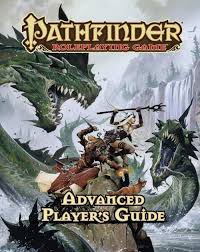
Review: Pathfinder Advanced Player's Guide

The Pathfinder Advanced Player's Guide is awesome.  Everything Paizo does seems to be awesome, and this book is no different.  Unlike 4th Edition's many extra Player's Handbooks, the Advanced Player's Guide adds to and expands the Pathfinder system, not just in adding more of the same kinds of options, but opening up all new options as well.

I want to keep these little reviews short and sweet, so I'm not going to go through everything that lies within this wondrous tome.  (Well, figuratively a tome - I got the PDF).  Rather, I would like to point out three things that are particularly good about the book, and also to discuss any flaws that I find in it.  Again, this won't be a thorough review, more like an impression.

First, the cool:

New Base Class: Alchemist
I really like that Alchemists are one of the new base classes presented by the Pathfinder Advanced Player's Guide.  They are in some ways the Paizo take on the 3.5 Artificer from the Eberron setting, but their focus is not on crafting magical items, but rather on producing alchemical items.

The most exciting application of this ability is creating grenade-like bombs which Alchemists throw in combat. They are walking with loads of potential chemical energy strapped to their backs and around their waists and in their pockets, and during combat, the Alchemist is mixing volatile chemicals on the fly and tossing them on her foes.  That's kind of cool.

Alchemists are also able to create mutagens which they can drink, Dr. Jeckyll style, to modify their abilities in a similar way to how transmutation spells like Fox's Cunning function.  As an Alchemist advances in level, she gets the chance to make Discoveries, improving her abilities, and there is even the Master Chymist Prestige Class, for those who really want to go over the top with their Jeckyll/Hyde issues.

A little note under an Alchemist's special abilities - they all receive the Throw Anything ability.  True, an Alchemist is pretty deadly armed with chemical bombs and mutagens, but I picture a fun scene with an Alchemist in a kitchen, hurling steak knives and pots of boiling water at her foes...

New Equipment
New weapons like the boar spear, sword cane, chakram and double crossbow make their debut in this book, as well as a number of new alchemical items and substances, which  makes a lot of sense with the new Alchemist class.  There is also some truly fantastic artwork depicting the various weapons and suits of armor - far more colorful and evocative than I've seen in other fantasy armories.

What really struck me, though, were the simple new pieces of adventuring gear.  Some things, like earplugs or a periscope, immediately make me wonder how I could build encounters around their use, or as a player, how I could abuse these things to gain an advantage in the game.  There are also items like the astrolabe, bear trap and compass that simply make sense, and can also be of obvious use to adventuring parties.

For those who are less than honest when they go down to the common room at the end of a hard days' dungeon-crawling, there are loaded dice and marked cards.  Overall, a lot of new cool stuff for the inevitable d20 shopping sprees at character creation and between adventurers.

New Prestige Class: Mastery Spy
It has always driven me a bit crazy that in almost all d20 systems, and in most gamist-simulationist combat-focused fantasy RPGs I've ever seen, there are heaps and piles of weaponry, racks of armor, and hundreds of combat abilities, as well as a plethora of magical spells that are aften solely useful in combat.  If I want to play a socially-focused character, a "face" so to speak, however, I'm just out of luck.  I'm going to wander, forlorn from encounter to encounter, making Diplomacy rolls and hoping that, at best, I might make some NPCs like me a little bit more.

Truly sad.

Enter the Master Spy, requiring a number of social skills at up to 7 ranks as well as the Deceitful and Iron Will Feats.  A Master Spy is going to be more socially powerful than other characters of her level, and will become a master of both disguise and deception, able to hide and even alter her alignment.  This is still a combat game, of course, so the Master Spy also periodically gets a bonus to sneak attack damage, and at higher levels, will get the assassin's death attack ability as well as the ability to entirely assume another persona at the highest level, allowing her to even fool the most powerful divination spells.

The problem remains that the Master Spy will not be as powerful or effective in combat as probably any other Prestige Class - that's just a fact of d20 in all of it's forms.  For a social-focused Rogue, however, or possibly a Bard, the Master Spy is a great choice, and I can see a game being built around an embedded Master Spy and her allies helping her from the outside, acting on the information she gathers.

Sneaky Fourth: Hero Points
Under New Rules, the Pathfinder Advanced Player's Guide introduces Hero Points.  These are very similar to my house rules of Action Points from the Eberron setting in 3.5.  Essentially, Hero Points give players more options, as well as some control over when things like character death happen.  I like this in particular because it gets rid of the 'meaningless death' issue in many fantasy RPGs - where the player fails one roll and her character plummets to her death, or is killed by the save-or-die spell, in a way that doesn't further the story whatsoever.  Screw that.

Flaws
A little artistic oversight - the swords on page 261 and 263 are being held in exactly the same way, almost like the artist was using the same sword-holding model for each painting.

Honestly, I am a serious fan of most of what Paizo does, but there aren't many flaws in this superb book.  Most of the 'flaws' I came up with were places where the book didn't go far enough, or where I wished they had included more of the great stuff they are serving up.

Conclusion

4 out of 5 vials of alchemical mutagen

Tuesday, November 16, 2010

Pathfinder: New Spellcasting Feats

I've always thought that Augment Summoning was lonely, and I wanted to see other Feats linked to Spell focus in the other arcane schools.  So here we go - this is a rough sketch, feel free to take and adapt for yourselves:

Augment Dispel
Prerequisite: Spell focus (abjuration)
When making a d20 roll related to dispelling a magical effect, the caster can take 20.

Augment Scrying
Prerequisite: Spell focus (divination)
The duration of all divination spells is extended to concentration +2 rounds where that duration exceeds the listed duration.  For example, scrying lasts for 1 minute/level or concentration +2 rounds, whichever is longer.

Augment Charm
Prerequisite: Spell focus (enchantment)
Charm spells cast by a person with this Feat are more powerful than normal.  Opposed Charisma checks are not required except for the most extreme commands, and the subject of the charm spell will undertake dangerous actions which fall short of suicide.  Lastly, when the charm spell ends, the victim will not have a clear memory of having been magically coerced unless she succeeds at a will save at the spell's normal DC.

Augment Elementalism
Prerequisite: Spell focus (evocation)
Then caster chooses an element in which she specializes.  When she casts evocation spells with this element, the deals +1 damage per damage die rolled.  For example, a fire-specialized elementalist would deal 5d6+5 damage at 9th level when casting fireball.

Augment Figment
Prerequisite: Spell focus (illusion)
Illusionists who take this feat are able to create more persistent figments using spells like Silent Image or Major Image.  These illusions persist even after the caster ceases concentrating on them.  As long as a figment persists, however, the caster loses that spell slot until she dispels the illusion or it is dispelled with a successful will roll due to disbelief.

Augment Undead
Prerequisite: Spell focus (necromancy)
All undead created by a necromancer with this feat are affected as if they are on desecrated ground, including +1 to attack and damage rolls as well as saving throws.  These undead also receive +1 hit point per HD.

Augment Augmentation
Prerequisite: Spell focus (transmutation)
When the transmuter casts a spell which augments the ability of it's target, this bonus is raised by +2.  So, for example, Fox's Cunning increases Intelligence by +6.

Wednesday, October 20, 2010

CCT Journal 15: Character Death

I killed two people last night. The end of the second module in this adventure path is a raid on the temple of the cult of Urgathoa that has been spreading the plague Blood Veil in the city of Korvosa. It is a dungeon crawl that follows many of the normal rules of dungeon crawls, which are stupid. I changed those stupid rules and it resulted in character deaths.

The first stupid rule is that bad guys wait patiently in the next room despite the sounds of pitched battle echoing through the whole dungeon. They do not come join other battles, organize, strategize, utilize choke points or any of that stuff. I changed this rule. When the party began raiding the temple and set off the alarm, the inhabitants grouped up, prepared by casting buffs, developed a plan and... well the PC's nearly got killed in the first encounter.

The second stupid rule, is a subset of the first, which is that you can take as much time as you want getting through a dungeon, including stopping to rest and recover spells. I changed this rule. I made sure it was clear there was a deadline. Lives needed saving. Bad guys were plotting and delays would mean heavy costs. I simply can't stand the idea that the villain is sitting in the last room of the dungeon with their evil plan nearly complete just waiting for the heroes to walk in before they go through with it. The result was that a string of encounters that would have been manageable one by one with breaks in between became an unbearable combination of mayhem.

Two player characters died.

The first was obliterated by a Leukodaemon's breath of flies - riddled with holes and eaten by maggots before their eyes. The second was crushed by the deformed claw of a Daughter of Urgathoa, already crippled by a stew of noxious diseases.

Neither death was planned or intended, though I'm always prepared for the possibility of character death. Since D&D characters are in pitched battle on a daily basis it can be a challenge to make a death memorable, but I think these worked out well, occurring as they did at the very end of a story arc and in appropriately gruesome ways. It was made more memorable by the fact that the party emerged victorious (barely), saving the city from certain doom.

Normally in D&D character death is a minor obstacle. You just need a diamond and a sufficiently high-level Cleric and voila! Respawn. But I think that is a stupid rule too. I don't think an epic adventure story should feel like Halo. So I changed that rule. Resurrection is still possible, but it is costly. Something significant and permanent changes about your character when you die and choose to be revived with magic. This change is both aesthetic and mechanical and should provoke an attendant response in roleplaying.

For each character it is different. Both characters chose last night to be resurrected. It was dramatic for both of them, but one of the characters who died last night was reborn in fire, her skin now glassy and black like a hunk of obsidian. Always an Oracle of Flame, her ordeal has deepened her relationship to the element. Now she hears voices in the fire, speaking. She lost some experience, and will have to readjust to her new circumstances, but she is back. Alive and able to continue the story. That kind of stuff makes character death, and resurrection, satisfying.

Wednesday, October 13, 2010

CCT Journal 14: Jumping the Rails

We're playing a published adventure module and everyone knows it. My players are cooperative. They are diving into the storyline and as long as we work together the "rails" of the adventure are fairly invisible beneath us. But sometimes even groups with the best of intentions feel constrained by the narrative of an adventure. Honestly, sometimes the players are better writers than the GM or designers who wrote the plot in the first place.

A couple such instances have popped up in my last two sessions of Curse of the Crimson Throne. Situations were written into the module which while standard D&D fare put the characters at a definite disadvantage and required a bit of willing blindness from the players. My players rightfully started asking questions - why do we have to do it that way? Wouldn't it make more sense if? I was forced to concede that their way did indeed make more sense even though it presented some problems for me in terms of running the adventure as written.

When Doug runs a game the situations are almost always malleable. His NPC's react to what the players decide to do. It is character driven all the way. My games are more story driven. There are stronger rails for the PC's to follow. But no matter what style of GM you are, there are times where you have to be willing to jump the rails. The goal of the game is fun and you will compromise your players fun if you never cooperate with them and their good ideas - even when those ideas upset the applecart a bit.

So when Hrungar the Dwarf started talking sensibly about luring the villain out of his highly defensible lair with a rather cunning ploy and leading him into an ambush - even though it was going to completely change a whole series of encounters, radically reduce the threat to the party and actually skip over some important information they needed - I went along with it. The ploy was clever enough, in my opinion, to actually trick an intelligent villain and you couldn't argue the basic point that rushing headlong into the bad guy's lair, though a staple of D&D, is pretty stupid. I rewarded the players by letting their clever ambush succeed (and then I rewarded them with a bit of bonus XP as well to make up for encounters they missed by not charging in). I found alternate ways to make the encounter exciting - this was an intelligent villain after all, he didn't just walk into a trap without some contingency plan. And I delivered the important information they needed through a different mechanism - instead of overhearing chatty guards they found notes on the villain's person.

Sometimes this happens and the players have no idea they've actually jumped the rails - that's good. It means you adapted very smoothly and they couldn't tell the difference between planned encounters and improvised ones. Sometimes you jump the rails and the players are fully aware, as in my situation the other night. This is also good. It lets the players know that the world is responsive to their decisions and gives them incentive to cooperate with the plot in the future since they won't feel constrained by it. You enhance the illusion that they are following the story by choice, which is a valuable illusion for the sake of fun.

Wednesday, September 22, 2010

CCT Journal 14: Winning

In the midst of my drive to continually challenge my players and create tension and drama by exacting costs out of their characters it is important not to forget a basic point: people like to win. No matter how dire things appear for the PC's underneath it all the odds of them actually losing are close to zero over the long haul. The miracle is that they manage to suspend their disbelief well enough that they actually fear losing given their near perfect batting average.

Once in a while it is important to throw in a little setback, to help them keep that enjoyable fear going, but it is equally crucial to serve up a big slice of victory now and again. I don't just mean the usual "we survived, the monsters didn't" sort of victory. I mean a genuine old-fashioned ass-handing destruction of a recurring antagonist. After all, this is why we went to the trouble of creating the antagonist in the first place - so it could be painfully dismantled.

When it is time for the PC's to have a meaningful victory it is time to tee it up for a nice homer. Now is not the time to throw some crazy curveball that confuses and frustrates them. The players should have seen the surprises and be able to anticipate them. They should, in fact, know how to counter the antagonist's strength and exploit their weaknesses to get the most joy out of winning in a convincing fashion. Lavish their successes with evocative description and pass over their failures with barely a comment to leave the impression that they're too cool for school. Create moments that scream for cheesy one-liners.

Like most aspects of storytelling there is a rhythm to this. Decisive victories can't happen too often or you rob them of their power. Nor are they really climactic material. At the climax everything is at stake and the cost is high. The kind of winning I am talking about here is good clean fun - nobody gets hurt that doesn't deserve it. Used correctly winning is one of the most addictive rewards in gaming. Who doesn't like kicking ass and taking names?

Wednesday, September 8, 2010

CCT Journal 13: Hating the Baddies

There are many ways to motivate players. Loot motivates some players. Experience and leveling motivates most players. Other kinds of rewards are plentiful - titles, acclaim, success, narrative focus, resolving story arcs - the list is endless. Punishment also works as motivation. You can punish players for making bad choices in the game by withholding rewards mentioned above, or more subtly boring them by not providing expected stimulus. The easiest way to keep players "on the rails" as it were is to make everywhere off the rails dreadfully dull.

One of the most rewarding ways, from a GM's perspective, for a player to find motivation is by hating the villains. When a nasty NPC you've created and run succeeds in earning the players everlasting enmity... it is pure joy.

It is easier said than done. Most villain schtick is so beyond-cliche that players hardly waste the energy yawning. Loot and experience are easy and quantifiable methods of motivation. Whereas a roleplaying motivation like this requires several steps.

#1 Make them care about themselves. This right here is the major reason attempts to motivate players by giving them a juicy bad-guy often short circuit. There is nothing the GM can do to force players to care about their own characters. You can encourage it. You can ask questions. You can provide gentle guidance and set a positive example in how to create fully-rounded interesting characters, but the player has to decide all on their lonesome at the end of the day to care. This isn't entirely true. The GM can also help lubricate this process by giving the players success. If they taste success they will become attached to the process of attaining that success to which their character is the vehicle. Time, familiarity, and positive reinforcement will eventually help a player come to care about their character even if they didn't at first.

#2 Make them care about others. If your player cares about their character this next step isn't so hard. The same process of time, familiarity, and positive reinforcement will work here. Want the players to care about an NPC - have the NPC make them laugh and provide them with rewards. The more subtly this is done the more effective it will be, but even a ham-fisted "this is the helpful NPC" approach will have some effect.

#3 Threaten the object of their affection. This part is where the cliche kicks in. Everyone has seen the Green Goblin dangle Mary Jane a million times. Cliche's are popular because they work, but you have to be creative about dressing them up a bit to hide their predictable nature. Try not to go after the obvious target (girlfriends, parents, village where the hero grew up etc...). Go for something a little more personal and unexpected - the Paladin's honorable reputation, the thief's good-standing in the guild, the helpful magistrate who always looked the other way. Even better if you go for something that players will usually assume is off limits - make the Dwarven womanizer impotent, the cleric's deity suddenly doubt his faith.

#4 Set them up for success. Help the party develop a good plan and convince them they will thwart the baddie's intentions. Give them allies, and every reason to believe they will be successful. Ensure the plan goes smoothly. Give them the advantage in a combat. Make the villain express fear, doubt, or pain so the villain seems weak. Don't overdo it. This is not the time to be melodramatic or the players will catch on to the trick. Just give the normal signals you give when the players are about to win a combat.

#5 Drop the floor out from under them. Make the villain win in an agonizing irreversible way. At the last minute the bad guy completes the sacrifice and permanently destroys the soul of the helpful cohort. Then make the villain get away before the players can take revenge.

#6 Let them stew. It is important you do not reward them immediately with any opportunities for cathartic revenge. Their hatred of the baddie really blossoms in this step right here as they explore different ways to rectify their loss and find each avenue a dead end. It is possible to repeat steps 3 through 6 several times building up a bigger hatred, but it is inadvisable to do so too many times in succession. 2-3 times is probably a maximum. Eventually players catch on and either stop caring or just redirect their frustration at the GM.

#7 Threaten them directly. After proving that the villain is capable and willing to hurt the players indirectly and giving them time to build up a good hatecrush, let them know the villain is coming after them directly. If you've done your job well the threat will be believable and players will be cautious, but also excited about finally getting their cathartic confrontation.

#8 Reveal the flaw. As opposed to step #4 where you misled the players into believing they would triumph, in the final confrontation you should encourage them to believe that history is about to repeat itself and they will once more lose to the villain. Then, in a reversal of step #5 let the players in on a secret - the flaw in the villains plan, the blindspot, the achilles heal. Present it for them to take advantage of. Let them pounce and win.

They will never love hating an imaginary character so much.

Friday, September 3, 2010

CCT Journal 12: Organizations

One thing that I've noticed about this adventure module, possibly because it is an urban campaign, is that it is drenched in organizations and factions. Due to the characters my players have created we even ended up with a few that weren't written in by the designers. Here is a list:

Military Organizations
Korvosan City Guard
Sable Company Marines
Order of the Nail
Grey Maidens

Religious Organizations
Temple of Abadar
Temple of Asmodeus
Temple of Saranrae
Temple of Pharasma

Secret Evil Organizations
Cult of Urgathoa
Red Mantis
Followers of Zon Kuthon

Korvosa Specific Organizations
Queen's Physicians
Cerulean Society
Arkona Family
The Acadamae
Eel's End
Orisini Academy of Fencing
Gaedren Lamm's Gang
Cow Hammer Boys
Girrigz' Wererat Army

Varisian & Shoanti Groups
Sczarni Thugs
Kasanda Foxglove's Family
Skoan Quah
Sklar Quah
Lyrune Quah

Others
Steelheart Dwarven Clan
Various Orc Tribes

I'm sure that list is incomplete. It's a lot of different groups for the players to keep track of and try to figure out how they are related. The good aspect of this is that the world definitely feels multi-layered and complex. They have been drawn into quite a bit of intrigue. On the down side they also seem to get pulled in so many directions at once it is distracting. I have tried to mitigate this by closely aligning certain NPC's and organizations with each other so that they are essentially interchangeable in terms of their plot function. You lose a little of the distinctiveness of the different groups, but for sanity's sake it is necessary. The best thing about this huge array of organizations is that the players really feel like they are having an impact on the world, when their actions shift the power-structure or even bring an end to a particular organization. When an entire criminal ring collapses or a whole tribe changes their attitude toward you it feels epic.

Sunday, August 22, 2010

Review: Pathfinder Advanced Players Guide

The newest big news from Paizo is the release of the Advanced Players Guide for their Pathfinder roleplaying game, which you should buy from your FLGS. Don't have a friendly local game store? Buy it here: the best game store just about anywhere.

Since I've already told you to buy it you might guess my review is going to be positive. Like everything Paizo has been doing lately this is a high quality product. The art is awesome, the layout is superb, and the content is top notch.

A staple of D&D systems is supplements with options for players to customize their characters. Every edition of the game has had a slew of such books. The quality has generally been highly variable. Most books have one or two neat new ideas in them, and a bunch of weird crappy ideas that no one ever uses. I have shelves full of past "Complete Warriors" and "Players Handbook 14's" which have seen very little use in campaigns I've run.

This is the first such supplement I've ever purchased in which practically every page has a juicy new idea that I can immediately visualize being used in a game by one of my players in the immediate future. The feats are not retreads of things already contained in the main book. Nor are they so obtuse as to be useless for most characters. There are literally dozens of solid, intriguing feats that could be used by a wide variety of characters. The spells and equipment are similarly spot on.

But where the book really adds interest are the 6 new core classes: Alchemist, Cavalier, Inquisitor, Oracle, Summoner, and Witch. All of these classes, with perhaps the exception of the Witch, are completely original and fill niches none of the other core classes do. Upon first read I had ideas for an Alchemist, a Cavalier, and a Summoner character I would really enjoy playing. We have an Oracle in our current campaign and it fits seamlessly.

My favorite thing in the book is the Prestige Class "Master Chymist". Designed to be a route for Alchemist characters to develop it is a wonderful riff on Dr. Jekyll and Mr. Hyde. The Master Chymist functions as an alchemist preparing extracts, tossing bombs, and whipping up magical potions to boost his allies most of the time. But this alchemist has imbibed a few too many of his own mutagenic concoctions. Several times a day he mutates into his alter ego, a bestial humanoid with a different name, and personality and goals - and supernatural abilities. When you build your Master Chymist you must design the two separate personalities (required to have differing alignments) and choose the particular mutations of your alter ego, which may be animal traits or magical resistances, strength, speed, sharp teeth or claws and such.

I already plan to create the pompous and calculating Lawful Evil Dr. Finias - investigator of the bizarre and macabre, and unscrupulous purveyor of hazardous chemicals; and his uncouthe mutagenic alter-ego "Moog" - Chaotic Good party animal and super-cuddly defender of people who feed him sweets.

Wednesday, August 18, 2010

CCT Journal 11: Buy In

We've ventured into the second module of the adventure path, "Seven Days to the Grave."

One of the complaints people have had about Curse of the Crimson Throne in the message boards and such is that it depends pretty heavily on the players developing an attachment to the city of Korvosa and actually wanting to save it. There isn't that much outside motivation for the players to stay on the rails if they aren't committed to being big damn heroes for the city.

Partly this complaint comes about through poor GMing and laziness on the part of the players. The job of the entire group when coming to the table at a roleplaying game is to forge a social contract which defines the expectations of the game. If this game is about saving the city of Korvosa from destruction the players need to know that and agree to that from the outset and FIND motivation for their characters. It isn't hard. Your character probably has family or friends in the city. You've lived there your whole life, is it so far-fetched for you to have a bit of civic pride?

But even for a group who failed at their basic responsibility to forge a little buy-in before the campaign began should have no trouble if they make it to the second module. In this adventure the city is hit by a devastating plague that threatens to kill a quarter or more of the population. The characters almost certainly get infected early on and have as much reason as anyone to want the plague to be cured and the threat ended.

Unless your party is full of sociopaths they should find it almost irresistible to try to help the mothers thrusting their sickly babies in their faces begging for help. The helpless impoverished people being forcibly quarantined and repressed under martial law. Any character of Good or Neutral alignment who wasn't moved to some kind of action by the large-scale tragedy going on around them would quickly be called out in my game.

Even if your characters are evil, or completely mercenary, how can you miss this opportunity? Saving the city from the plague is a sure-fire route to fame and fortune. There are plenty of unscrupulous people who would pay a lot of money for a working cure, and even an evil jerk through and through cares what happens to their friends and loved ones - who are certainly not immune to the disease.

Honestly, people who complain that the adventure path didn't provide strong enough motivations for the players to pursue the plot are playing a different game from me.

Wednesday, July 28, 2010

CCT Journal 10: Harrowing

We concluded book one of this adventure path, "Edge of Anarchy" last night. I will give my brief review of the book before talking about something I added which I believe has had a great effect on the game.

If you've actually been reading all of these you know by now my experience has been largely positive. I'm thoroughly impressed with the quality of the production, the creativity, and thoughtful design that went into this first module. There are plentiful engaging NPC's. The encounters are diverse and exciting. The setting and background are fascinating and they do a good job of helping your explore it. It has more story than any other adventure module I've ever read. That being said if there is one thing I think they could do better it is to focus more intently on that story. Without significant effort from the GM it would be very easy for this book to feel like a series of disconnected missions given by the captain of the city guard, which is super cliche. Tying these missions together, not just thematically, but with a coherent storyline would be a major improvement. I did that work on my own, because I am a story-addict, but I think it is within reach for the designers themselves to do, and I hope that is the way they head in the future.

If I'm so awesome at story-weaving, what did I do to fix this deficiency in book one? Let me tell you...

This adventure path incorporates an original deck of cards for divining called "Harrow". The deck has six suits named after the six attributes in D&D: Strength, Dexterity, Constitution, Intelligence, Wisdom, Charisma. Each of the six books in the path are also themed around one of these attributes/suits in the Harrow deck, and a Harrowing is performed at the start of each module to give the players some fun thematic little advantages for the upcoming adventure. This is all great, but they didn't take it far enough.

During character creation I gave each player a custom Harrowing which gave them some detailed character hooks and storylines to be played out over the course of the campaign. Each person received a 9 card spread. The 3 cards in the left column covered their past. The 3 cards in the middle column covered their present, and the 3 cards in the right column covered their future. Each space also had its own meaning, so the layout looked like this:

----PAST-----------PRESENT----------- FUTURE

Your happiest----- A helpful force----- Something you should
memory----------- in your life--------- aspire toward

Something you ----Relationship to -----Your Riddle to solve
have forgotten----- another PC

Your darkest ------A harmful force---- Something you should
memory----------- in your life--------- avoid

Dealing the cards into this layout and then revealing them one by one I interpreted each card for them vaguely and asked the player to give me the specifics on the matter. So for example the card "The Rabbit Prince" came up in the center space for one of the players. The card represents the capriciousness of combat. I told the player that he should choose one of the other PC's and that his character's relationship to that person would be defined by a constant bickering/rivalry. He chose to see Safiya the Oracle as a nosy older-sister who he is always arguing with. In another player's reading the card "The Avalanche" came up in the top-left space. The card represents a disaster, but since this is a happy memory I told the player that it was a disaster averted or avoided in his life that he remembers happily. He decided that at one time he was nearly executed for a crime he didn't commit and at the last minute new evidence was found that exonerated him.

Once every character's reading was complete not only did they have a lot more information about themselves and neat details to roleplay out, but I had the bones of how I was going to weave them into the story of the adventure module. I chose 6 of the juiciest items from each reading and assigned one to each book of the campaign. I then began to figure out how I would connect that little character detail or story hook into the main storyline in such a way as to make the character more invested in what was happening.

So, for example, one of the characters had overcome a drug addiction and still owed a lot of money to his old dealer. His old dealer was who he put under "Harmful forces" in the reading. In this first module I decided to make that dealer Devargo Bavarsi, the owner of Eel's End a place which figures prominently in the adventure, forcing a conflict and a resolution to that particular storyline. Having nearly been captured and killed by Bavarsi the players turned the tables and got Bavarsi killed by his own spiders. He no longer has that enemy and he had a strong in-character reason to be involved in that part of the main plot.

Some of the individual subplots tied in very tightly with the main storyline and others were a bit more independent, but I kept them all bouncing through the first book alongside the main events and tied them in where appropriate. This gave me some fun stuff to plan and a chance to really "own" the campaign without adding inordinate amounts of work. It gave the players a game which feels like it was crafted for them and not for any generic group of hero adventurers. And it led to a fun final session where each of these story lines were resolved concurrently.

Usually I think splitting up the party is a bad idea. Anyone who has to sit out of the action for more than a few minutes is going to get bored. But once in a while I like to run this kind of session where everyone is separate or divided into teams and multiple scenes are happening at the same time. To do it effectively you have to plan it very carefully and get it all set up before hand. I asked my players to keep their focus and cheer on their fellows when it was a scene they were not involved in, and I drew out all the maps ahead of time, positioned my miniatures and had written a detailed outline of how I expected the scenes to go in columns alongside one another in my notebook. Then I jumped into the action right away with minimal exposition.

Each player was given 2-3 minutes of attention on their scene and the pace was kept high. If they delayed in responding to a prompt their character stalled in the game. I jumped around the circle through four different scenes trying to leave each scene at a dramatically appropriate moment like it was a movie or a TV show cutting together events in different locations to increase tension. One player was running a gauntlet full of traps, while another was in an arena with wild animals trying to outsmart or survive his competitors, and another player was in a massed battle with a gang of imps, and another was being pressed to make extremely difficult and life-changing choices by conflicting parties. I was pretty successful in gauging the timing so each scene concluded at approximately the same time and no one was left sitting for more than 10 or 15 minutes. Furthermore, when they were active they were the star of their own scene and everyone's scene was exciting enough to hold the attention of the inactive players.

Following each of these individual scenes with the group encounter that forms the conclusion of the module and brings back most of the important PC's from the first adventure had the effect of making it feel like the proper end of a chapter. Story arcs were completed. Major questions were answered. The dominant problem they had faced was resolved, and their individual little plots were equally at a close... little do they know that it was just the start of much bigger challenges ahead.

Tuesday, July 27, 2010

CCT Journal 9: Dungeoncrawling

We're coming up on the final session of the first module in this adventure path, "Edge of Anarchy." I'm really enjoying the game overall. I like my players and I'm getting into the story, which makes a happy Aric.

The penultimate session last week was quite epic. I'm not a dungeon-crawl kind of guy, so I've been happy with how little of that kind of stuff there is in this adventure path. But D&D started with dungeon crawls so you know there is going to be some of that in there. (Spoiler Alert) The last big mission the players are given in this first module is to retrieve the body of a Shoanti Barbarian which was sold to a necromancer. The players go down into the necromancer's laboratory in caves underneath a mausoleum and beat on his minions to get the body parts back.

Having read the entire series of modules now I am confident I can say it is a trend that the dungeons are very dangerous. The players had better be thinking on their feet, and the GM may need to tweak things a bit to avoid player deaths. It's not just the inhabitants that make the dungeons dangerous, it is the layout and the way the encounters are designed to interact with each other so that careful or intelligent players will do well, but unlucky or reckless players will quickly find themselves in over their heads. My players were already in dire straits early in the evening and they were in a full panic halfway through. The characters are not destined to meet the necromancer himself in this adventure which is good. At the beginning of the evening my players were boldly declaring they would charge right in and take him down despite his dangerous reputation. After a stint in his laboratory, getting their asses kicked by his minions, they've decided they would rather avoid than confront him.

Though I am not a big fan of dungeon crawls, I'm very pleased with how these dungeons are designed. It's not just that they're challenging - as much an intellectual puzzle as a hack'n'slash-fest - it is also because they are varied and they make sense. There was a lot going on in this relatively small dungeon. Very unique encounters and challenges which all required a different approach to be solved. Best of all there was a good reason why everything was where it was and behaving in the way it was. No one had to just pretend that Gelatinous Cubes make sense, or a bunch of Derro slaves would be able to live in a laboratory without, you know, living quarters and a food source. The logical layout made it possible for my players to guess what might be behind that next door, a sure sign that the designer has succeeded in building a world that other people can inhabit.

Monday, July 26, 2010

CCT Journal 8: Email

Elsewhere on this blog we've discussed how much writing outside of game time can add to the experience. In our Karia campaign we ended up with multiple novels worth of original material to add color and flavor to the game. I have no such lofty ambitions for this campaign, but since I was going to be away for almost the entire month of July I wanted something to keep my player's heads in the game. If there were no contact that entire time I felt we'd have a lot of ground to make up when we did start playing again. Whereas even a couple mental reminders in story form could bridge the gap very well.

So I wrote an email to the entire group giving them one "hook" per character and one bigger "hook" for the entire group. The intent being that they would each reply in character how they will handle their individual situations and then discuss over email as a group how to handle the bigger one. The rules were that they could do nothing in email that altered the main plot or which would be overly challenging and thus require dice or a battlemat to resolve fairly.

So for example one of the characters was led by his pet Pseudodragon to a sunken chest. He told me how he would go about retrieving it by buying a water-breathing potion and diving in the river. He was then faced with a chest with no lock or mechanism to open it. He tried a bunch of different tactics which failed, eventually pouring holy water over it and chanting a prayer which revealed a magical inscription "Rubies from a Steel Heart". He is now trying to figure out what that means.

There are a lot of advantages to email or blogs or any means of collaborative storytelling about your game in between sessions. When you are all together the game naturally and correctly tends to focus on the main plot and scenes of action or conflict. Telling a good story, though, involves characters that feel fully-rounded which means having side-plots and moments of pure character development. This kind of stuff often has a hard time fitting into a game session and even if you have plenty in your group sessions, you can always add more.

Tuesday, June 22, 2010

CCT Journal 7: Danger

My players think I am a vicious son of a bitch. I don't know how much that is the typical playful banter between D&D players and GM where they assume I am out to destroy their characters, or how much that is a reflection of my style being different from what they are accustomed to. I am NOT a sadistic or vindictive GM though. I am on the player's side. We are all here to have fun and tell a good story. I want them to succeed and come across as big heroes as much, or maybe more than they do. The catch is that a good story requires sacrifice and danger. My heroes are going to bleed before they win.

D&D often has a way of killing any tension or excitement in combat by making it overly technical, slow, and well.. not dangerous. If you follow the advice in the DMG for how to build encounters your characters will rarely be in any serious danger - especially if they are good at gaming the system. Combat that is not dangerous is not as meaningful or fun. So how do I fix this?

#1 Wounds & Vitality. Hit Points are just about the worst possible way to measure damage in combat. There is no difference between a character with full health and one with a single hit point left. They are identical in abilities. The Wounds & Vitality system originally developed for the Star Wars RPG is way better. It tracks physical health (Wounds) and energy (Vitality) separately. You lose vitality as the combat wears on and you get more and more tired. But Wounds can be lost even if at full Vitality any time an enemy critically hits. It means that from the very first attack in combat you are in danger. Wound pools are small and the moment you get wounded you take a -2 on all rolls from that point forward. This single change will instantly make your combats go from ho-hum to 'oh shit!'.

#2 GM by Feel. I am not a rigid GM when it comes to the numbers. Who cares if the monster entry says it has 10 hit points, if it makes the fight more interesting I'll let that thug keep swinging till he's at -15 or whatever, until he's made an impression. Conversely if a character gets in a dramatic critical hit that would make an epic killing blow I won't spoil it by insisting my NPC still has 2 hit points left. Fudge the numbers for drama's sake. Your players will thank you. Fights should be punctuated by a certain frequency of hits and damage, risk, and victory. Get a feel for the rhythm and bend the facts a little till reality matches what is fictionally appealing.

#3 Vivid Description. Don't bore you players with 10 minutes of description for each round of combat, but don't let a round go by without at least one or two descriptive comments about the progress of the battle. It makes an impression on players when a hit doesn't do 6 points of damage, but instead puts a crimson gash in their femoral artery. Don't shy away from gore and learn to make your descriptions proportional to the drama of the scene.

#4 Make 'em Pay. You players will be happier about a victory that was difficult to achieve. Don't hand it to them. Make them work for it. Make them expend concrete resources in the form of health, spells, scrolls, potions, damaged gear, reputation etc... If they take risks (as they should) reward them with drama. A character who leaps across a chasm will be much happier if they barely make it, hanging on by a fingertip, than if they clear it by 40'. Make it seem like success was unlikely and they will be thrilled. Furthermore, reward them with interesting failure periodically. A character can't get up and make an exciting come back if they weren't knocked down the first time.

Thursday, June 17, 2010

CCT Journal 6: NPC's

We're just over halfway through the first module in this adventure path, now. I'm pleased with how much time and fun we're getting out of it (so far 5 sessions). It makes the price on these modules very reasonable if you calculate that out (4 hours per session for 8 sessions to complete the module = 32 hours x 4 people = 128 hours of fun for $20 or approximately $0.16/hour). It's a better value the more players you have.

So, halfway through the first module what do I think of "Edge of Anarchy"? Mostly, I'm very pleased. We're having fun and that is the main point. The presentation and layout and stuff is all very very good. The encounters are not all ingenious. There has been a lot of groups of "1st level warriors/thugs". But there have been occasional good surprises as well, like the crocodile at the beginning. The thing this module has pleasantly surprised me with is the quality, quantity, and diversity of the NPC's.

There are ALOT of NPC's to introduce in this first module. It makes sense. It is set in a city and the players are being set up to play a major role in the politics of Korvosa. There are a lot of important people to meet at the beginning. Many of the NPC's they are meeting now are ongoing allies/enemies through the whole campaign. What is nice, is that this cast of NPC's is really quite deep and diverse. Each one, even inconsequential characters that end up getting killed in a single encounter, has a backstory, motivations, personality quirks, and these are up front enough that it is easy to incorporate a lot of it into the game. The effect is to create a pretty richly textured city full of personalities.

My players are definitely picking favorites among these NPC's and making choices based on those allegiances which affect the outcome of events. So far, fortunately, they haven't decided to try to break the module by attacking a crucial NPC, but you can see how the designers have created something that will be very different group to group based on how they choose to interact with the NPC's presented to them. It is effective design which creates a lot of fun at the table which isn't just another combat encounter. In fact, our games have been a lot more roleplaying and interaction than violence so far (though there has been plenty of violence as well).

My favorite NPC's so far have all had bit parts. The prissy fencer Amin Jalento. The drunkard guardsman Grau. The brooklyn accented Cow Hammer Boys. These small roles really liven up a session and get chuckles. So much, that I can't help throwing in my own cameos. Much hilarity was had from the story of Mad-Murphy the doomed fisherman who has survived three separate attacks by devilfish with the help of his personal god 'Dribble'.

Wednesday, June 16, 2010

CCT Journal 5: Loot

One thing I don't like about D&D is loot. I know plenty of players just really love loot. They feel rewarded by it. They are motivated to seek it, and they feel their characters are defined by it. Personally I just think it is a big pain in the ass.

When I run a homebrew D&D game I put in a bunch of house rules putting the balance of power in character development on attributes and skills and such so that equipment is less necessary to advancement. Money and gear is then somewhat rarer than normal, and I don't usually let my players spend time in magic item shops (which I find obnoxious and dull).

Running a module, I obviously don't have that option (or not as easily). Furthermore, the designers couldn't have known what types of characters would be playing this module so the loot tends to lean more toward money and less toward unique items and gear. The players are expected to go buy the gear they want and will need to survive challenges later on.

So I've "solved" this situation by introducing the characters to NPC artisans. The Grindleknaut Brothers are new owners of a boutique custom magic item factory in Korvosa. The players have become members of their exclusive clientele and are able to order a wide variety of items made custom, or have items modified as they go along. The do all of this entirely out of game so that we're not wasting fun time looking over charts of crafting costs, but this allows players to "shop" in a way which is more original and fulfilling to me. They can keep that beloved mace or longbow and just "upgrade" it as they get the funds, rather than replacing it with the next +1 higher from a shop window. Plus these Grindleknaut Brothers have a personality and their magic items have little "surprises" built into them that give me great plot hooks and entertainment.

We're only just getting started, but so far I'm satisfied that this will be a good compromise with the format of the modules where almost all the rewards come in monetary form and I have very little interest in coming up with an endless list of vendors offering +2 Plate Mail and Cloaks of Resistance.